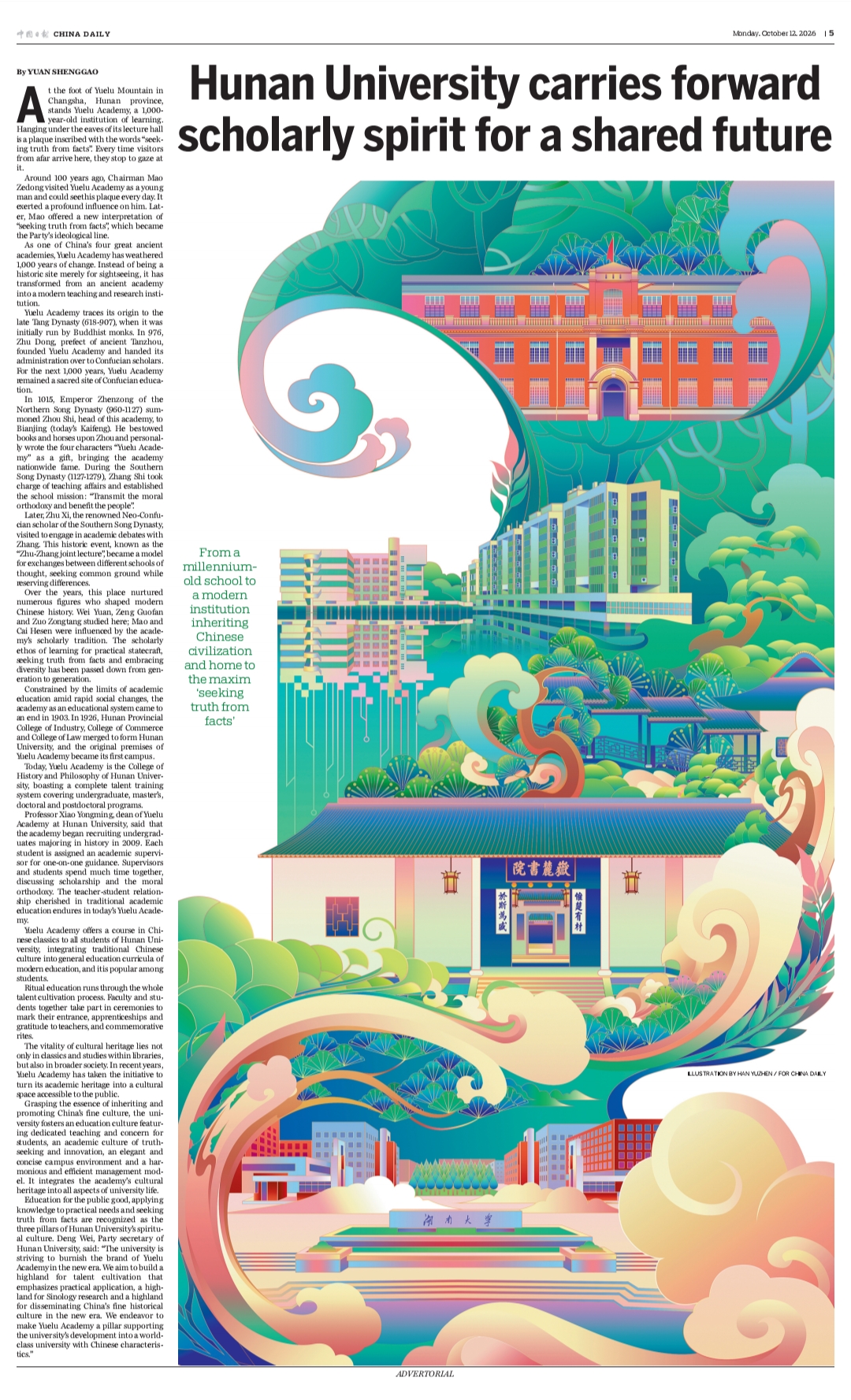
《中国日报》2026年10月12日第5版。

《中国日报》2026年10月12日第6-7版。
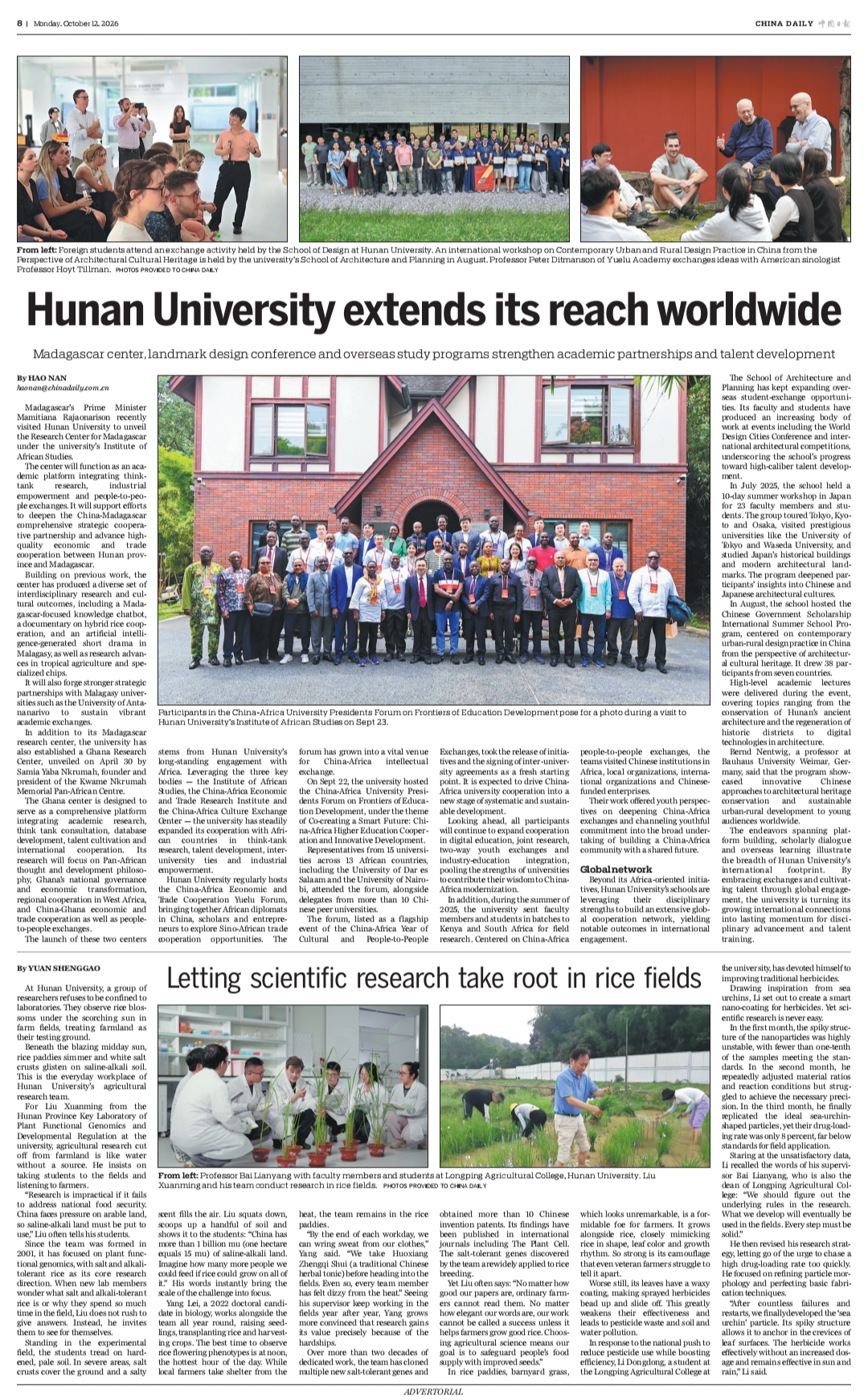
《中国日报》2026年10月12日第8版。
Hunan University carries forward scholarly spirit for a shared future
At the foot of Yuelu Mountain in Changsha, Hunan province, stands Yuelu Academy, a 1,000-year-old institution of learning. Hanging under the eaves of its lecture hall is a plaque inscribed with the words "seeking truth from facts". Every time visitors from afar arrive here, they stop to gaze at it.
Around 100 years ago, Chairman Mao Zedong visited Yuelu Academy as a young man and could see this plaque every day. It exerted a profound influence on him. Later, Mao offered a new interpretation of "seeking truth from facts", which became the Party's ideological line.
As one of China's four great ancient academies, Yuelu Academy has weathered 1,000 years of change. Instead of being a historic site merely for sightseeing, it has transformed from an ancient academy into a modern teaching and research institution.
Yuelu Academy traces its origin to the late Tang Dynasty (618-907), when it was initially run by Buddhist monks. In 976, Zhu Dong, prefect of ancient Tanzhou, founded Yuelu Academy and handed its administration over to Confucian scholars. For the next 1,000 years, Yuelu Academy remained a sacred site of Confucian education.
In 1015, Emperor Zhenzong of the Northern Song Dynasty (960-1127) summoned Zhou Shi, head of this academy, to Bianjing (today's Kaifeng). He bestowed books and horses upon Zhou and personally wrote the four characters "Yuelu Academy" as a gift, bringing the academy nationwide fame. During the Southern Song Dynasty (1127-1279), Zhang Shi took charge of teaching affairs and established the school mission: "Transmit the moral orthodoxy and benefit the people".
Later, Zhu Xi, the renowned Neo-Confucian scholar of the Southern Song Dynasty, visited to engage in academic debates with Zhang. This historic event, known as the "Zhu-Zhang joint lecture", became a model for exchanges between different schools of thought, seeking common ground while reserving differences.
Over the years, this place nurtured numerous figures who shaped modern Chinese history. Wei Yuan, Zeng Guofan and Zuo Zongtang studied here; Mao and Cai Hesen were influenced by the academy's scholarly tradition. The scholarly ethos of learning for practical statecraft, seeking truth from facts and embracing diversity has been passed down from generation to generation.
Constrained by the limits of academic education amid rapid social changes, the academy as an educational system came to an end in 1903. In 1926, Hunan Provincial College of Industry, College of Commerce and College of Law merged to form Hunan University, and the original premises of Yuelu Academy became its first campus.
Today, Yuelu Academy is the College of History and Philosophy of Hunan University, boasting a complete talent training system covering undergraduate, master's, doctoral and postdoctoral programs.
Professor Xiao Yongming, dean of Yuelu Academy at Hunan University, said that the academy began recruiting undergraduates majoring in history in 2009. Each student is assigned an academic supervisor for one-on-one guidance. Supervisors and students spend much time together, discussing scholarship and the moral orthodoxy. The teacher-student relationship cherished in traditional academic education endures in today's Yuelu Academy.
Yuelu Academy offers a course in Chinese classics to all students of Hunan University, integrating traditional Chinese culture into general education curricula of modern education, and it is popular among students.
Ritual education runs through the whole talent cultivation process. Faculty and students together take part in ceremonies to mark their entrance, apprenticeships and gratitude to teachers, and commemorative rites.
The vitality of cultural heritage lies not only in classics and studies within libraries, but also in broader society. In recent years, Yuelu Academy has taken the initiative to turn its academic heritage into a cultural space accessible to the public.
Grasping the essence of inheriting and promoting China's fine culture, the university fosters an education culture featuring dedicated teaching and concern for students, an academic culture of truth-seeking and innovation, an elegant and concise campus environment and a harmonious and efficient management model. It integrates the academy's cultural heritage into all aspects of university life.
Education for the public good, applying knowledge to practical needs and seeking truth from facts are recognized as the three pillars of Hunan University's spiritual culture. Deng Wei, Party secretary of Hunan University, said: "The university is striving to burnish the brand of Yuelu Academy in the new era. We aim to build a highland for talent cultivation that emphasizes practical application, a highland for Sinology research and a highland for disseminating China's fine historical culture in the new era. We endeavor to make Yuelu Academy a pillar supporting the university's development into a world-class university with Chinese characteristics."
HUNAN UNIVERSITY PUTS SCIENCE INTO PRACTICE
Faculty and students take on diverse range of challenges including the preservation of cultural heritage and bridge engineering
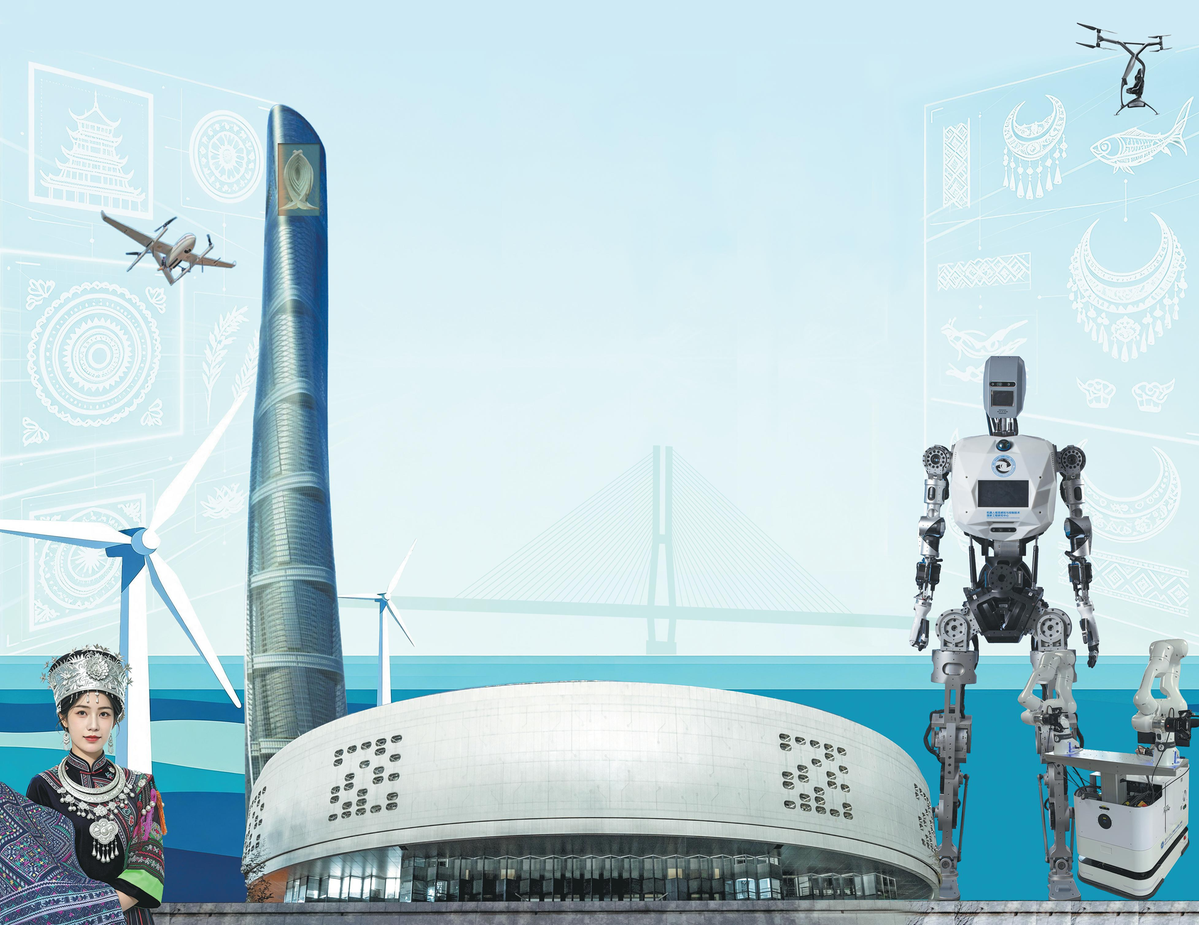
As a powerhouse of scientific innovation, Hunan University in Changsha, Hunan province, is advancing research spanning embodied robotics, digital documentation of intangible cultural heritage, Tianhe supercomputing infrastructure, wind farm technology and civil engineering.
Robotic intelligence
As large language models endow machines with the ability to think, enabling robots to perceive, reason and act like humans in the physical world has become urgent.
To help models learn physical laws through interactions with the real world, the School of Artificial Intelligence and Robotics at Hunan University has made breakthroughs in core technologies.
During an experiment at the school in 2025, everyone in the lab held their breath when a bimanual biomimetic robot steadily placed a glass bottle onto a medical spectroscopy detector.
It marked the first time the dual-arm robot had autonomously completed sample transfer, meaning the robot had gained autonomous decision-making capability.
To complete this task, the robot needs to identify targets via a multimodal system, plan its movements, conduct precise grasping and coordinate its arms in real time.
According to Zhang Hui, dean of the school, the faculty has in recent years been integrating the agile "robotic body" with a sophisticated "analytical instrument brain". By introducing large models as the intelligent hub, the team has realized full-process autonomy.
"Biomimetically driven integrated lightweight design was our primary technical hurdle," said Zhang. "We built our model drawing on the muscle-synergy mechanism of the human body, and proposed a modular scheme with a single-joint integrated drive, sensing and control. Meanwhile, we optimized material distribution to substantially cut the weight of the robot. It achieved millimeter-level grasping precision while boosting its response speed."
After tackling the flexibility of the robot's "body", the next challenge was to equip its "brain" with intelligent decision-making. Zhang put forward a hierarchical decision and control strategy driven by large models and established a feedback learning mechanism to help revise the robot's cognition and raise the success rates of its movements.
Supercomputing
When developing new drugs and materials, it is crucial to know accurate molecular properties. Researchers once relied on 2D molecular structures or atomic spatial arrangements. Yet a molecule's chemical traits and reactivity are governed by its outer electron distribution. Traditional quantum chemical calculations take too long to generate large volumes of precise electron data, limiting AI applications in this field.
To address this challenge, the research team led by Professor Zeng Xiangxiang from the College of Computer Science and Electronic Engineering of Hunan University leveraged the Tianhe series supercomputers and mapped the EDBench dataset.
Larger than public databases, the dataset provides electron density data ready for AI training. With this dataset, researchers can efficiently conduct virtual screening and rational design of massive candidate molecules at the electronic level prior to physical experiments, which is expected to greatly shorten research and development cycles and lower costs.
Meanwhile, research teams from the college, represented by researcher Wang Feng and Professor Zhao Jie, have long conducted studies on high-performance computing, programming languages and compilation optimization, parallel programming models, as well as AI compilation and programming frameworks. The teams developed critical software that connects high-level applications with computing chips. Relevant technologies have been applied to the Tianhe series national supercomputer systems, providing fundamental software support for large-scale scientific computing applications.
The National Supercomputing Center in Changsha is located in the university. Approved by the Ministry of Science and Technology and funded by the Hunan provincial government, it is China's third national supercomputing center.
The center hosts computing platforms including Tianhe series supercomputers and the "Tianhe-Tianma" computing clusters. Since its official launch in 2014, the center has been built into a national open platform for new-generation AI public computing power.
Powering innovation
Luo An, a professor of the College of Electrical and Information Engineering at Hunan University, was among the first cohort of students after China resumed the college entrance examination in the late 1970s.
After enrolling at Hunan University as an industrial enterprise electrical automation major, he went on to conduct years of research on power conversion and control and led his team to overcome a series of core bottleneck technologies.
Over the years, he independently developed core power conversion equipment for high-power electromagnetic metallurgy and copper foil electrolysis.
He pioneered high-power electromagnetic metallurgy power conversion technology, bringing China to the international forefront in relevant technologies and equipment.
Working alongside his students, Luo conducted field investigations at major steel mills. Abandoning traditional thinking in electrical-machinery theory, the team went through hundreds of project demonstrations and revisions.
They pioneered slotless magnetic shielding for electromagnetic stirring technology and invented bidirectional power supply technology for electromagnetic stirring.
The team developed a 3.6-meter-wide slab electromagnetic stirring system. Together with his students, Luo cracked the international bottleneck of large-capacity tundish electromagnetic refining and developed the world's first equipment for 30-metric-ton dual-channel electromagnetic refining, pushing China's special steel electromagnetic metallurgy technology to the top level.
Faced with low quality and high energy consumption of ultrathin copper foil produced by copper enterprises, Luo's team developed China's first 50-kilovolt-ampere copper foil electrolysis power supply equipment, enabling domestic production of high-quality ultrathin copper foil.
To tackle challenges in special power supply for sensitive loads, Luo made breakthroughs in high-power high-overload synchronous power conversion technology, realizing leapfrog development of China's special power supply equipment.
At present, Luo's research outcomes have been adopted by more than 200 enterprises at home and abroad including Shougang, Baosteel and Jiangxi Copper.
Safer structures
With rapid economic growth, China has built an increasing number of long-span bridges. A larger span reduces the structural stiffness of bridges. But vibrations triggered by wind and traffic pose major safety risks. Dampers are used to mitigate such vibrations.
Until the early 2000s, hydraulic dampers imported from overseas were widely used for vibration control on China's large bridges. Yet these imported large hydraulic dampers often suffered oil leakages and failures after several years, which were a threat to the safety of infrastructure.
Targeting this challenge, Professor Chen Zhengqing at the College of Civil Engineering of Hunan University and his team embarked on tough research.
Since 2006, Chen and his team have devoted themselves to research on eddy current damping technology and achieved breakthroughs in energy dissipation and vibration mitigation.
He has developed new permanent magnet eddy current damping equipment for the vibration buffering of large structures, outperforming traditional hydraulic dampers by a wide margin and establishing international leadership in this new technology.
The industrialization of the technology has been realized, offering a Chinese solution for structural vibration control. Chen's achievement — Research and Application of New Permanent Magnet Eddy Current Damping Technology for Vibration Reduction and Energy Dissipation — won the first prize of the 2023 State Technological Invention Award.
The eddy current damping technology developed by Chen has been deployed in landmark projects including the Shanghai Tower, Beijing Daxing International Airport and the Jiangyin Yangtze River Bridge.
Adoption of digital tools
When traditional intangible cultural heritage meets AI, ancient crafts no longer have to be displayed inside museum showcases. Digital technologies can be adopted to rescue and revitalize a number of ethnic minority traditional crafts and cultural heritage.
Dong brocade is one example. In Tongdao Dong autonomous county in Huaihua, Hunan province, the craft of weaving Dong brocade goes back thousands of years. However, many exquisite patterns were on the verge of extinction as master craftspeople passed away.
Starting in 2009, teachers and students from the School of Design of Hunan University traveled to Dong villages and worked alongside local residents. Through documentation and co-creation, the traditional craft has been reinterpreted and revitalized.
Through explorations in the lab, a digital platform to empower the inheritance and innovation of ethnic brocade was born. Using AI-generated content, the team recovered endangered Dong brocade patterns and generated new designs while respecting traditional aesthetics.
Min Xiaolei, an associate professor at the school, said: "After we empowered the industry with digital technologies, the production cycle of a Dong brocade bag strap was shortened by eight times, and its selling price dropped by 10 times. Besides higher production efficiency, diversified industrial products of multiple categories can be produced, all designed by our team."
New campus
In September, Hunan University's Science and Innovation Harbor Campus welcomed its first batch of faculty and students.
As the Phase I project of the campus, this modern science and education complex integrates the cultural legacy of the 1,000-year-old academy with cutting-edge scientific innovation.
Walking inside, visitors enter the campus through the understated yet striking main gate and proceed along the central axis. The overall color palette combines warm tones with grey and white. Red dominates the central cluster.
In the future, the campus will tackle core technologies, boost precise alignment between innovation and industry chains, accelerate on-site commercialization of scientific and technological achievements, and help Hunan build a nationally competitive highland for scientific and technological innovation.
Hunan University extends its reach worldwide
Madagascar center, landmark design conference and overseas study programs strengthen academic partnerships and talent development
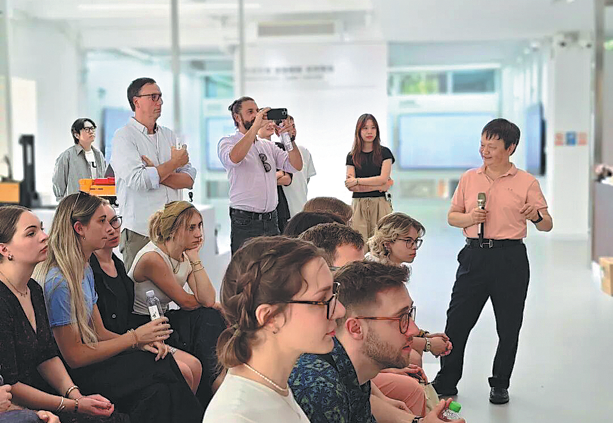
Foreign students attend an exchange activity held by the School of Design at Hunan University. CHINA DAILY
Madagascar's Prime Minister Mamitiana Rajaonarison recently visited Hunan University to unveil the Research Center for Madagascar under the university's Institute of African Studies.
The center will function as an academic platform integrating think-tank research, industrial empowerment and people-to-people exchanges. It will support efforts to deepen the China-Madagascar comprehensive strategic cooperative partnership and advance high-quality economic and trade cooperation between Hunan province and Madagascar.
Building on previous work, the center has produced a diverse set of interdisciplinary research and cultural outcomes, including a Madagascar-focused knowledge chatbot, a documentary on hybrid rice cooperation, and an artificial intelligence-generated short drama in Malagasy, as well as research advances in tropical agriculture and specialized chips.
It will also forge stronger strategic partnerships with Malagasy universities such as the University of Antananarivo to sustain vibrant academic exchanges.
In addition to its Madagascar research center, the university has also established a Ghana Research Center, unveiled on April 30 by Samia Yaba Nkrumah, founder and president of the Kwame Nkrumah Memorial Pan-African Centre.
The Ghana center is designed to serve as a comprehensive platform integrating academic research, think tank consultation, database development, talent cultivation and international cooperation. Its research will focus on Pan-African thought and development philosophy, Ghana's national governance and economic transformation, regional cooperation in West Africa, and China-Ghana economic and trade cooperation as well as people-to-people exchanges.
The launch of these two centers stems from Hunan University's long-standing engagement with Africa. Leveraging the three key bodies — the Institute of African Studies, the China-Africa Economic and Trade Research Institute and the China-Africa Culture Exchange Center — the university has steadily expanded its cooperation with African countries in think-tank research, talent development, interuniversity ties and industrial empowerment.
Hunan University regularly hosts the China-Africa Economic and Trade Cooperation Yuelu Forum, bringing together African diplomats in China, scholars and entrepreneurs to explore Sino-African trade cooperation opportunities. The forum has grown into a vital venue for China-Africa intellectual exchange.
On Sept 22, the university hosted the China-Africa University Presidents Forum on Frontiers of Education Development, under the theme of Co-creating a Smart Future: China-Africa Higher Education Cooperation and Innovative Development.
Representatives from 15 universities across 13 African countries, including the University of Dar es Salaam and the University of Nairobi, attended the forum, alongside delegates from more than 10 Chinese peer universities.
The forum, listed as a flagship event of the China-Africa Year of Cultural and People-to-People Exchanges, took the release of initiatives and the signing of inter-university agreements as a fresh starting point. It is expected to drive China-Africa university cooperation into a new stage of systematic and sustainable development.
Looking ahead, all participants will continue to expand cooperation in digital education, joint research, two-way youth exchanges and industry-education integration, pooling the strengths of universities to contribute their wisdom to China-Africa modernization.
In addition, during the summer of 2025, the university sent faculty members and students in batches to Kenya and South Africa for field research. Centered on China-Africa people-to-people exchanges, the teams visited Chinese institutions in Africa, local organizations, international organizations and Chinese-funded enterprises.
Their work offered youth perspectives on deepening China-Africa exchanges and channeling youthful commitment into the broad undertaking of building a China-Africa community with a shared future.
Global network
Beyond its Africa-oriented initiatives, Hunan University's schools are leveraging their disciplinary strengths to build an extensive global cooperation network, yielding notable outcomes in international engagement.
The School of Architecture and Planning has kept expanding overseas student-exchange opportunities. Its faculty and students have produced an increasing body of work at events including the World Design Cities Conference and international architectural competitions, underscoring the school's progress toward high-caliber talent development.
In July 2025, the school held a 10-day summer workshop in Japan for 23 faculty members and students. The group toured Tokyo, Kyoto and Osaka, visited prestigious universities like the University of Tokyo and Waseda University, and studied Japan's historical buildings and modern architectural landmarks. The program deepened participants' insights into Chinese and Japanese architectural cultures.
In August, the school hosted the Chinese Government Scholarship International Summer School Program, centered on contemporary urban-rural design practice in China from the perspective of architectural cultural heritage. It drew 38 participants from seven countries.
High-level academic lectures were delivered during the event, covering topics ranging from the conservation of Hunan's ancient architecture and the regeneration of historic districts to digital technologies in architecture.
Bernd Nentwig, a professor at Bauhaus University Weimar, Germany, said that the program showcased innovative Chinese approaches to architectural heritage conservation and sustainable urban-rural development to young audiences worldwide.
The endeavors spanning platform building, scholarly dialogue and overseas learning illustrate the breadth of Hunan University's international footprint. By embracing exchanges and cultivating talent through global engagement, the university is turning its growing international connections into lasting momentum for disciplinary advancement and talent training.
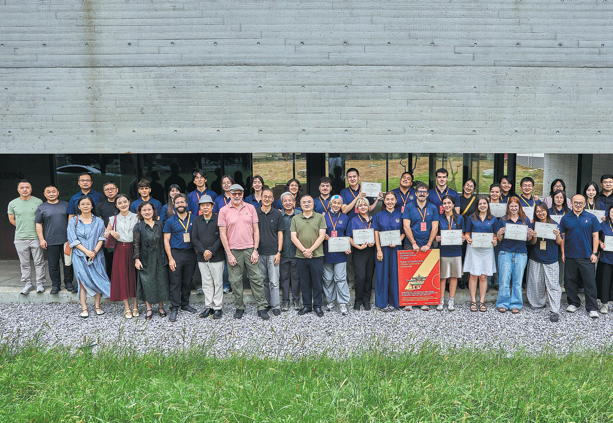
An international workshop on Contemporary Urban and Rural Design Practice in China from the Perspective of Architectural Cultural Heritage is held by the university's School of Architecture and Planning in August. CHINA DAILY
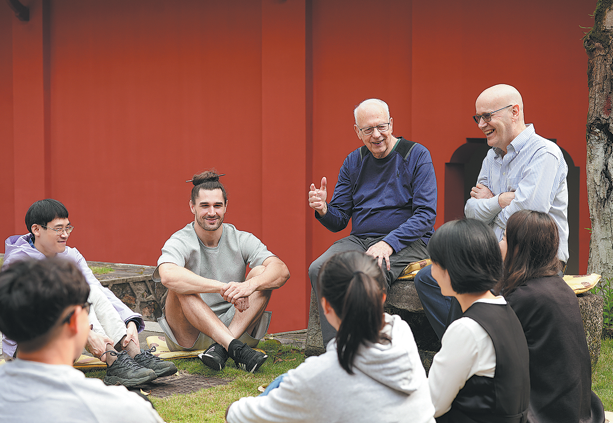
Professor Peter Ditmanson of Yuelu Academy exchanges ideas with American sinologist Professor Hoyt Tillman. CHINA DAILY

Participants in the China-Africa University Presidents Forum on Frontiers of Education Development pose for a photo during a visit to Hunan University's Institute of African Studies on Sept 23. CHINA DAILY
Letting scientific research take root in rice fields
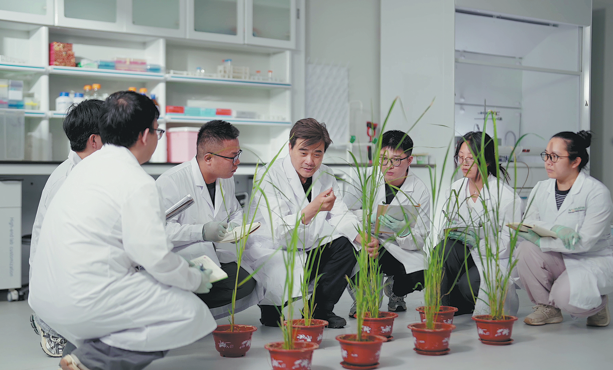
Professor Bai Lianyang with faculty members and students at Longping Agricultural College, Hunan University. CHINA DAILY
At Hunan University, a group of researchers refuses to be confined to laboratories. They observe rice blossoms under the scorching sun in farm fields, treating farmland as their testing ground.
Beneath the blazing midday sun, rice paddies simmer and white salt crusts glisten on saline-alkali soil. This is the everyday workplace of Hunan University's agricultural research team.
For Liu Xuanming from the Hunan Province Key Laboratory of Plant Functional Genomics and Developmental Regulation at the university, agricultural research cut off from farmland is like water without a source. He insists on taking students to the fields and listening to farmers.
"Research is impractical if it fails to address national food security. China faces pressure on arable land, so saline-alkali land must be put to use," Liu often tells his students.
Since the team was formed in 2001, it has focused on plant functional genomics, with salt and alkali-tolerant rice as its core research direction. When new lab members wonder what salt and alkali-tolerant rice is or why they spend so much time in the field, Liu does not rush to give answers. Instead, he invites them to see for themselves.
Standing in the experimental field, the students tread on hardened, pale soil. In severe areas, salt crusts cover the ground and a salty scent fills the air. Liu squats down, scoops up a handful of soil and shows it to the students: "China has more than 1 billion mu (one hectare equals 15 mu) of saline-alkali land. Imagine how many more people we could feed if rice could grow on all of it." His words instantly bring the scale of the challenge into focus.
Yang Lei, a 2022 doctoral candidate in biology, works alongside the team all year round, raising seedlings, transplanting rice and harvesting crops. The best time to observe rice flowering phenotypes is at noon, the hottest hour of the day. While local farmers take shelter from the heat, the team remains in the rice paddies.
"By the end of each workday, we can wring sweat from our clothes," Yang said. "We take Huoxiang Zhengqi Shui (a traditional Chinese herbal tonic) before heading into the fields. Even so, every team member has felt dizzy from the heat." Seeing his supervisor keep working in the fields year after year, Yang grows more convinced that research gains its value precisely because of the hardships.
Over more than two decades of dedicated work, the team has cloned multiple new salt-tolerant genes and obtained more than 10 Chinese invention patents. Its findings have been published in international journals including The Plant Cell. The salt-tolerant genes discovered by the team are widely applied to rice breeding.
Yet Liu often says: "No matter how good our papers are, ordinary farmers cannot read them. No matter how elegant our words are, our work cannot be called a success unless it helps farmers grow good rice. Choosing agricultural science means our goal is to safeguard people's food supply with improved seeds."
In rice paddies, barnyard grass, which looks unremarkable, is a formidable foe for farmers. It grows alongside rice, closely mimicking rice in shape, leaf color and growth rhythm. So strong is its camouflage that even veteran farmers struggle to tell it apart.
Worse still, its leaves have a waxy coating, making sprayed herbicides bead up and slide off. This greatly weakens their effectiveness and leads to pesticide waste and soil and water pollution.
In response to the national push to reduce pesticide use while boosting efficiency, Li Dongdong, a student at the Longping Agricultural College at the university, has devoted himself to improving traditional herbicides.
Drawing inspiration from sea urchins, Li set out to create a smart nano-coating for herbicides. Yet scientific research is never easy.
In the first month, the spiky structure of the nanoparticles was highly unstable, with fewer than one-tenth of the samples meeting the standards. In the second month, he repeatedly adjusted material ratios and reaction conditions but struggled to achieve the necessary precision. In the third month, he finally replicated the ideal sea-urchin-shaped particles, yet their drug-loading rate was only 8 percent, far below standards for field application.
Staring at the unsatisfactory data, Li recalled the words of his supervisor Bai Lianyang, who is also the dean of Longping Agricultural College: "We should figure out the underlying rules in the research. What we develop will eventually be used in the fields. Every step must be solid."
He then revised his research strategy, letting go of the urge to chase a high drug-loading rate too quickly. He focused on refining particle morphology and perfecting basic fabrication techniques.
"After countless failures and restarts, we finally developed the 'sea urchin' particle. Its spiky structure allows it to anchor in the crevices of leaf surfaces. The herbicide works effectively without an increased dosage and remains effective in sun and rain," Li said.
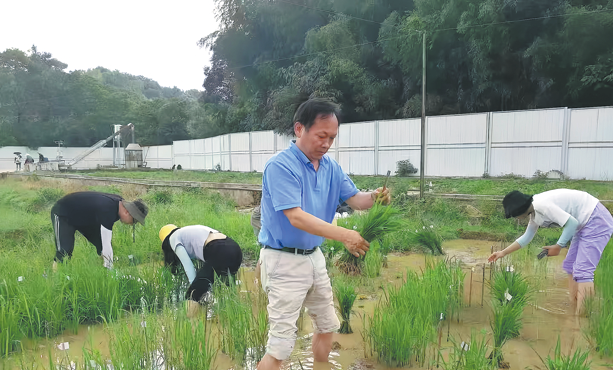
Liu Xuanming and his team conduct research in rice fields. CHINA DAILY
来源:中国日报
责任编辑:卜瀚韬


 最新更新
最新更新